Today in church we sang a hymn from the fifth century written St. Patrick. It’s called “I Bind Unto Myself Today.”
Check it out on YouTube: https://www.youtube.com/watch?v=yH4ToVxtn9A

Today in church we sang a hymn from the fifth century written St. Patrick. It’s called “I Bind Unto Myself Today.”
Check it out on YouTube: https://www.youtube.com/watch?v=yH4ToVxtn9A

The idea of courtly or romantic love became important in the twelfth century. Early patronesses of the cultural movement were Eleanor of Aquitaine, Marie of France and Ermengarde, Viscountess of Narbonne.(the heroine of my historical novels set in the middle ages). Courtly love emphasized the devotion of a knight to a lady, usually not his wife. It became an elaborate code of behavior. The aim of courtly love was to civilize the uncouth knights of the day. Our modern ideas of chivalry date from the middle ages.

To learn more:
https://web.cn.edu/kwheeler/courtly_love.html
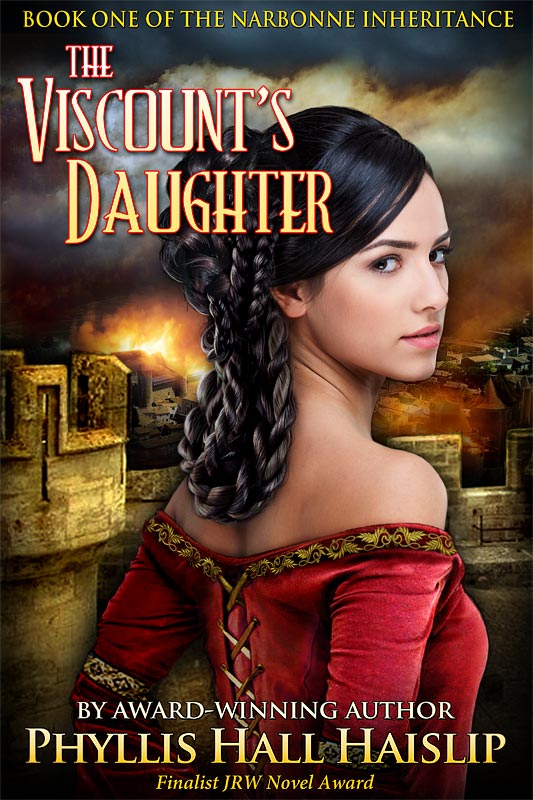
My novels, including my medieval trilogy, are available on Amazon:

a beguinage, an architectural complex to house Beguines

A sketch of a tomb of a Parisian Beguine
Beguines were women who lived in religious communities without vows or retiring from the world. They could leave and even marry. They lived in poverty and worked with the sick and the poor.They were popular in Northern Europe from the 13th through the 16th centuries.
To learn more:
http://www.users.csbsju.edu/~eknuth/xpxx/beguines.html
http://stores.renstore.com/history-and-traditions/the-beguine-womens-movement-of-the-13th-century#.WCpZOuErKAw
My novels, including my medieval trilogy, are available on Amazon:

873 Mechthild is an asteroid orbiting the Sun named after the celebrated Christian medieval mystic Mechthild of Magdeburg c. 1207 – c. 1282/1294).
Machtild of Magdeburg’s The Flowing Light of Divinity described her visions of God. Her criticism of church dignitaries and religious laxity along with her theological ideas made her controversial. Some wanted to burn her writings possibly because she was a woman writing about God, and she wrote in vernacular German. Her book is available on Amazon.
To learn more:
https://www.poetryfoundation.org/poems-and-poets/poets/detail/mechthild-of-magdeburg
My novels, including my medieval trilogy, are available on Amazon:

Conway Castle

Harlech Castle
To learn more:
https://en.wikipedia.org/wiki/James_of_Saint_George
http://www.castlewales.com/jsgeorge.html
My novels, including my medieval trilogy, are available on Amazon:

Gislebertus’ naked Eve

Gislebertus signed his work in a prominent place where everyone could see it.

Last Judgement Typmpanum
Gislebertus was a twelfth-century Romanesque sculptor. You may have learned in history class that medieval artists didn’t sign their work, but that isn’t true. Not all sculptors placed their name where everyone could see it like Gislebertus did. However, since Gislebertus was arguably the greatest sculptor of his day, it only fair that he get credit for his wonderful work.
Even though we know of other work attributed to Gislebertus, not everyone agrees that he was the sculptor of the tympanum above.
https://en.wikipedia.org/wiki/Gislebertus
https://www.khanacademy.org/humanities/medieval-world/latin-western-europe/romanesque1/v/tympanum-of-the-last-judgment-autun
My novels, including my medieval trilogy, are available on Amazon:


In 1275 Dervoguila of Galloway (c.1210-1290) founded Sweetheart Abbey, a Cistercian monastery, in Scotland in memory of her beloved husband John de Balliol (c.1208-1268). After his death, she kept his embalmed heart in a silver and ivory chest that she took with her everywhere. Her husband had supported scholars at Oxford, and in 1282, Dervoguila endowed Balliol College in his memory. Their son briefly became John I, King of the Scots from 1292-1296. The monastery was suppressed in 1624.
My latest medieval novel, The Viscountess and the Templars, is now available.
My book is available from Kindle:
http://amzn.to/2dka9YN
It is also available in paperback:
http://amzn.to/2d1lJpi
To learn more about Sweetheart Abbey:

A Romanesque church in Andorra
The medieval world is still with us in Andorra. Andorra is an independent principality in the Pyrenees Mountains between France and Spain. It is ruled jointly by a Spanish bishop and the President of France. Feudal tenure involved such complications, and it is interesting that Andorra has existed to this day with medieval rights and privileges intact.
When I wrote my trilogy about Viscountess Ermengarde of Narbonne who lived in the 12th century, it was a challenge to make the peculiarities of feudal tenure coherent to modern readers. Ermengarde only controlled half of the city of Narbonne while the archbishop controlled the other half. This arrangement clearly didn’t work out very well or we would have more Andorras today.
To learn more about Andorra:
https://simple.wikipedia.org/wiki/Andorra
My latest medieval novel, The Viscountess and the Templars, is now available.
My book is available from Kindle:
http://amzn.to/2dka9YN
It is also available in paperback:
http://amzn.to/2d1lJpi

Périgard
The best preserved of these medieval towns is Monpazier, pictured below, where the medieval metal bins for measuring grain still survive. Around the market square, medieval vaulted archways can still be seen.

Monpazier
To learn more about bastides:
http://about-france.com/tourism/bastide-towns.htm
My latest medieval novel, The Viscountess and the Templars, is now available.
My book is available from Kindle:
http://amzn.to/2dka9YN
It is also available in paperback:
http://amzn.to/2d1lJpi

 <
<
The green man was a popular grotesque often seen on churches and other buildings in the medieval world. The green man is a symbol of rebirth and representations of him exist in many cultures. There are about 70 depictions of the green man on the facade of Chartres Cathedral. A three-headed green man from Chartres is pictured below.

Green men were also seen inside churches as on this Misericord from Norwich Cathedral.

To learn about the history of the green man:
http://www.greenmanenigma.com/history.html
My latest medieval novel, The Viscountess and the Templars, is now available:
My book is available from Kindle:
http://amzn.to/2dka9YN
It is also available in paperback:
http://amzn.to/2d1lJpi

My book is available from Kindle:
http://amzn.to/2dka9YN
It is also available in paperback:
http://amzn.to/2d1lJpi

King Edward I of England lost his wife Eleanor of Castile in 1290 after 35 years of marriage. The couple was devoted, and the bereft Edward memorialized his wife in 12 crosses marking the places her body rested each night on its journey from the vicinity of Lincoln to London.
Three of the memorial crosses, pictured above, have survived. Edward and Eleanor are depicted on Lincoln Cathedral below.

In all the times I visited London, it never occurred to me to wonder where the Underground stop named Charing Cross got its name. It was the site of one of the Eleanor Crosses. In the twentieth century, a sculptor made a new Eleanor Cross near its original location.

To read more:
https://en.wikipedia.org/wiki/Eleanor_cross
http://unusualhistoricals.blogspot.com/2014/02/for-loves-sake-edward-i-and-eleanor.html
My newest medieval novel is now available:
http://amzn.to/2cZhKZ0


The raising of Lazarus depicted on a capital.

I love the look on the face of the fellow to the far right.
If I had to choose a favorite monastery, it would be San Juan de la Pena in the Pyrenees in Spain. Monks wished to withdraw from the world. And you couldn’t get much farther from the world than this isolated, dramatic location. The monastery is on a mountain top and the buildings are nestled beneath a huge outcropping of rock. The original monastery was built in 920 and in the 12th century, the cloister was added. The romanesque cloister is full of delightful capitals on its columns depicting biblical stories.
For more information:
http://www.hikepyrenees.co.uk/san-juan-de-la-pena.html
My medieval novels are available on Amazon:


Gargoyles on medieval churches were ornamental water spouts. When monsters were not water spouts, and only decorative elements, they are called grotesques.
The gargoyles and the grotesques in the medieval world were symbols of evil. They generally adorned the outside of the churches where they were guardians, warding off evil by their presence. These monsters also served to contrast the evils of the world with the sanctity one would find within the churches.
Gargoyles have been made throughout history. In the nineteenth century, the gargoyle monkey below at Princeton Universiy has a camera to capture the pranks of students.

To learn more about gargoyles:
http://www.medieval-life-and-times.info/medieval-art/gargoyles.htm
My medieval novels are available on Amazon:


Lohengrin was the son of Percival in the Arthurian legends of the Holy Grail. He was sent to rescue a damsel in distress and did so in a boat pulled by a swan. They married. The damsel was never allowed to ask Logengrin’s name and when she did, he left in a boat also pulled by a swan. Lohengrin is known as the knight of the swan.
To learn more about the knight of the swan.
https://en.wikipedia.org/wiki/Lohengrin
My medieval novels are available on Amazon:


From prehistoric times, people have sought to cure epilepsy, migraines, loss of consciousness and behavioral changes by relieving the pressure on the brain. This was called trepanation or trepanning. Medieval medical practitioners often used a drill to relieve pressure on the brain. The medical term for trepanation is craniotomy and it is still performed today in cases of traumatic brain injury.
,
To learn more about medieval trepanation:
http://www.history.com/news/perforated-skulls-from
-middle-ages-found-in-spain
My medieval novels are available on Amazon:


Windmills came into use during the 12th century for the milling of grain into flour. Pope Celestine III issued a decree around 1191 mandating windmill owners should pay a tithe to the church because the wind belonged to God. There were other options for grinding grain. In early days, people used a quern-stone to grind grain by hand. Watermills and animal-powered mills were also used in the middle ages.
To learn more about medieval windmills:
http://www.historytoday.com/terence-paul-smith/english-medieval-windmill
http://www.castlesandmanorhouses.com/life_14_mills.htm
http://scholar.chem.nyu.edu/tekpages/windmills.html
My medieval novels are available on Amazon:


Saint Catherine was a fourth-century Christian martyr and popular medieval saint. Saints were identified by their attributes (symbols). Catherine’s attribute was the wheel because the emperor condemned Catherine to death on a spiked wheel. The wheel shattered at her touch. She was beheaded with a sword. Because of her great learning, she is the patron saint of scholars. In addition to the wheel, she is often shown with a book, a sword and the palm, the symbol of martyrdom.

To learn more about St. Catherine:
https://en.wikipedia.org/wiki/Catherine_of_Alexandria
My medieval novels are available on Amazon:


Catapults (trebuchets) of various sorts called by differing names depending on their locations and specifications were important siege engines in the Middle Ages until cannons were introduced in the thirteenth century. By the fourteenth century, cannons were essential not only in the assault of castles but also in their defense.
To learn about cannons and castles:
http://www.medievality.com/decline-of-castles.html
http://www.themcs.org/weaponry/cannon/cannon.htm
My medieval novels are available on Amazon:


The Battle of Crécy in 1346 between England and France during the Hundred Years War was a decisive victory for England. The longbow was responsible for winning the battle. Longbow men could reload much father than the crossbow men. The longbow decimated the heavily armed French cavalry.
To learn more about the battle of Crécy:
http://www.history.com/this-day-in-history/battle-of-crecy
My medieval novels are available on Amazon: